
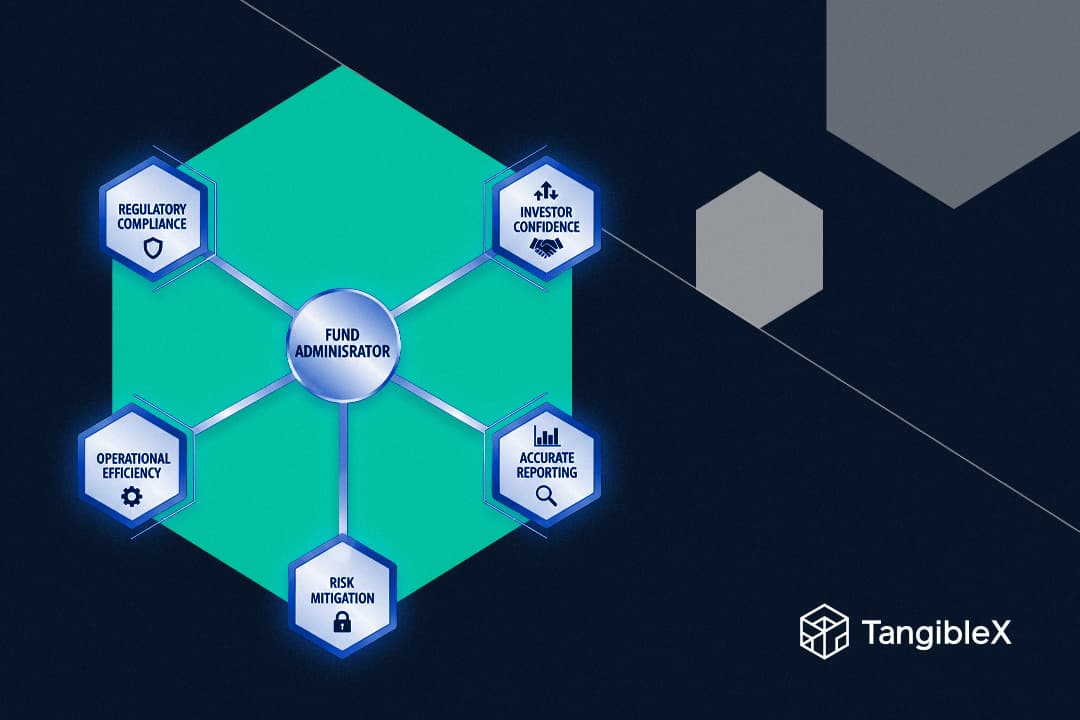
For decades, access to institution-grade structured investments was reserved for a limited circle: high-net-worth individuals, institutional investors, and those with the right connections. Today, that landscape is changing. The combination of mature regulatory frameworks, licensed fund managers, and new technology platforms is redefining who can participate in investment opportunities that were once out of reach. To understand this evolution, it is worth starting with the central figure in the entire process: the fund manager.
What does a fund manager actually do?
A fund manager is much more than someone who simply “chooses investments”. They are a professional, or more commonly a licensed entity, responsible for identifying opportunities, structuring them within an appropriate legal framework, managing investors’ capital, and being accountable for every decision they make.
In Australia, this activity is neither informal nor discretionary. Fund managers operate under an Australian Financial Services Licence (AFSL) issued by the Australian Securities and Investments Commission (ASIC), the national financial services regulator. This licence imposes specific obligations: acting honestly and efficiently, managing conflicts of interest, maintaining adequate resources, and complying with verifiable standards of conduct. When an investment opportunity originates from a licensed manager, investors are not relying solely on personal trust; there is a supervisory framework behind it.
This point is essential and often overlooked. The difference between a serious investment proposition and an attractive but unsupported promise is not the projected return, but who originates it and under which regulated framework it operates.
How structured investment opportunities are created
Investment opportunities do not appear out of thin air. Behind each one is a deliberate process that begins long before an investor sees a product information sheet.
The fund manager first identifies an asset or asset class with potential: this may include real estate, private credit, infrastructure, agricultural assets, or other real-world assets. They then conduct due diligence: independent valuation, risk analysis, legal verification of ownership, and assessment of commercial viability. Only once the asset passes this screening process is the legal structure designed to allow multiple investors to participate in an organised and protected manner.
This structural design is what distinguishes a structured investment from a direct purchase. The asset is not offered in isolation; it is incorporated into a legal vehicle with clear rules regarding rights, obligations, profit distribution, and exit mechanisms.
Unit trusts and managed investment schemes: the vehicles that organise the market
In the Australian market, two structures account for a significant portion of collective investment: unit trusts and managed investment schemes (MIS).
A unit trust divides the economic ownership of a pool of assets into units. Each investor holds a specific number of units representing their proportional interest in the trust. The trustee has a legal obligation to manage the assets for the benefit of the unit holders, not for its own benefit. This fiduciary duty is one of the strongest protective pillars within common law systems.
A managed investment scheme, meanwhile, is the regulatory framework ASIC uses to govern collective investments: contributions from multiple investors pooled together to generate financial benefits and managed by a third party. Schemes registered with ASIC must have a licensed responsible entity, legally compliant offer documentation, and auditable compliance mechanisms.
For investors, the practical consequence is straightforward: when participating through these structures, their rights do not depend on anyone’s goodwill. They are defined by law, documented in the scheme constitution, and overseen by the regulator.
“Defined Interest”: what it really means to own a fraction
One of the concepts that provides the greatest clarity for modern investors is that of a defined interest. When someone invests in a regulated structure, they do not acquire a vague promise; they acquire a specific and documented legal right to a portion of the investment vehicle.
This principle underpins fractionalisation, the ability to divide high-value assets into accessible interests. A commercial property, a credit portfolio, or an infrastructure project can be structured so that investors participate with substantially lower amounts than would be required for a direct purchase, while maintaining clear proportional rights to returns and capital.
Well-executed fractionalisation is not a shortcut; it is legal and financial engineering applied within regulated frameworks. That distinction—between fractionalising with structure and fractionalising without it—is what separates responsible innovation from speculation.
Governance, compliance, and investor protection: the layer of trust
Every serious investment structure incorporates a governance layer that operates continuously, not merely at issuance. This includes audits, periodic reporting, proper asset custody, segregation between the manager’s assets and investors’ assets, and formal procedures for managing conflicts of interest.
Investor protection, in other words, is not an additional benefit; it is embedded within the very design of regulated structures. When the framework is respected, investors know what they own, who manages it, to whom that manager is accountable, and what mechanisms exist if something does not function as intended.
Evolving access: technology built on regulatory foundations
This is where the market is experiencing its most interesting transformation. The structures described above have existed for decades; what is changing is access to them.
Platforms such as TangibleX are building the bridge between licensed fund managers and a broader investor base, enabling structured opportunities backed by real-world assets—originated and managed within regulated frameworks—to become more accessible, transparent, and efficient. Technology does not replace the structure; it enhances it. The licensed manager continues to originate and manage investments, the regulatory framework continues to provide protection, and what evolves is the gateway to participation.
For investors evaluating this new ecosystem, the right question is not, “What return does this opportunity promise?” but rather, “Who originates it, under what structure is it organised, and what protections are built into it?” When the answers involve a licensed fund manager, a regulated structure, and verifiable governance mechanisms, discussions about returns can take place on solid foundations.
The future of structured investment is not about eliminating fund managers or bypassing regulation. It is about something far more valuable: preserving the foundations that create trust and, upon them, opening the doors to more investors than ever before.
About Us
TangibleX was founded to simplify access to real-world asset investments by providing digital infrastructure that connects investors with opportunities originated by licensed fund managers.
Our Vision is to seamlessly integrate technology into everyday life, empowering institutions and individuals to reach their full potential.
The TangibleX mission is to create innovative digital solutions that redefine how people interact with technology, driven by excellence, collaboration, and a customer-first approach.
Join our waitlist today and become part of the future of real-world asset investing.
Follow us on social media to stay up to date with the latest news!
This article is for informational purposes only and does not constitute financial advice. Before making any investment decisions, consider your personal circumstances and consult a licensed financial adviser.